

Cleaning Condenser Coils on Your Amana Fridge in 10 Minutes or Less
The Lowdown
- You’ve got a problem on your hands if those condenser coils on your Amana fridge are all clogged up – weak cooling, longer run times and an extra £20-£50 per year on your electricity bill are all potential consequences of neglecting to clean them out.
- The good news is that most homeowners can have this sorted out in around 10 minutes using nothing more than a soft-brush and a vacuum cleaner.
- There are, however, some Amana models that feature sealed or maintenance-free condensers that are best left to a certified pro to deal with.
- We’d recommend checking your coils every 6-12 months in a normal household, and every 2-3 months in places that are dusty, greasy or just plain messy.
Why Cleaning Your Amana Condenser Coils Really Matters
Your Amana fridge’s condenser coils play a pretty crucial role in keeping the whole cooling cycle going. They’re essentially a heat exchanger where the compressor dumps the warmth it’s sucked out of the fridge, allowing the refrigerant to cool back down and carry on with the job. When there’s a load of dust, pet hair and kitchen grease clogging up the place, though, it’s like wrapping the coils in a thick blanket and making the compressor work overtime just to keep things cool.
According to the experts, neglecting to clean your fridge coils can increase energy consumption by as much as 15-30 per cent – that’s equivalent to an extra £20-£50 per year on your electricity bill on a typical unit. And if you live in a place that gets dusty, has pets or is just generally a bit of a mess, you’ll need to check those coils more often – like every 3 months. A quick clean in 10 minutes can sort you out, though, and help prevent a whole load of other problems down the line.
Cleaning Condenser Coils on Your Amana Fridge in 10 Minutes or Less.
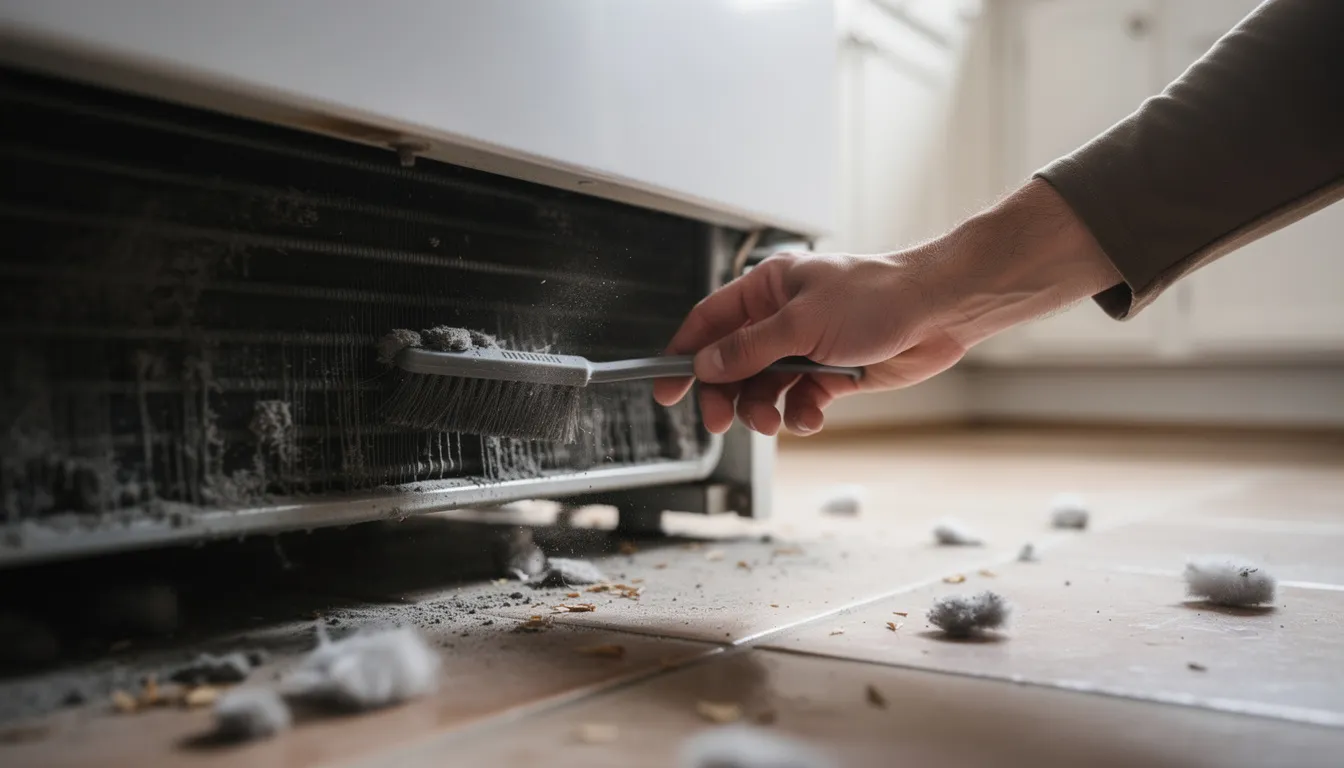
Know Where Your Amana Fridge’s Coils Are
Before you can get cleaning, you need to know exactly where your condenser coils are located. The problem is, Amana coil placement can vary depending on the model, so do yourself a favour and check your unit before you start getting out the tools.
Most common coil locations for Amana fridges include:
Model Type
Typical Coil Location
Access Method
Top Freezer (made after 2010)
Behind the lower front grille
Just pull it off or unclip it
Bottom Freezer/French Door
Under the cabinet, front access
Just pull out the base grille
Older Models (mid-2000s)
Back panel near the bottom
Need to pull the fridge out from the wall
Side By Side
Rear or front bottom
Depends on the model
To find your exact model number, just check the data plate inside the fresh food compartment – it should be on a side wall and have the model number and year printed on it, e.g. SBD522VE, GC2228EEDB, XRSS267BB. Check your model on the Amana website to see if the condenser is user-serviceable or not – if it’s been sealed or marked as ‘no-clean maintenance-free’, leave it alone and call a pro.
Safety First: Get Ready to Clean
When cleaning the coils, safety is the top priority. Take a minute to get ready, and you’ll be protected from electric shock and prevent damage to those delicate coil fins.
You’ll need the following tools:
- A soft-bristle condenser brush or a clean paintbrush
- Vacuum cleaner with a crevice attachment
- A flashlight or your phone’s light
- A dust mask (if you’re allergy-prone)
- Cardboard or a mat (just in case you need to move the fridge)
**Don’t forget to unplug the fridge – a proper pull of the plug is the best way to ensure it doesn’t come back to life while you’re working. And if your Amana model has coils in the rear that need the back panel to be removed, just slide the fridge out from the wall while protecting your kitchen floor with cardboard or a protective mat. For front-access models, you probably won’t need to do anything.
Cleaning Your Amana Condenser Coils in 10 Minutes or Less
Here’s the quick process that works for most Amana fridges with accessible condensers:
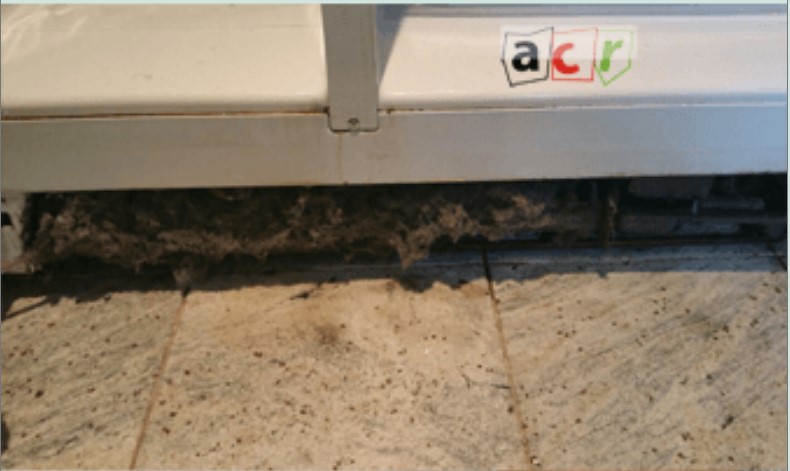
- Get the access panel or grille off. On most models made after 2010, you should be able to just pull the toe-kick or front grille off, or release it with a quarter-turn fastener. Older units may have a few screws to take out first – just make sure you put the hardware somewhere safe, so you can’t lose it. 2. Take a close look at your coils. Grab your flashlight and take a good, hard look at the coils and the area around them. Check for heavy dust and dirt buildup on the metal tubing, pet hair clumps or grease on the finned surfaces. Don’t miss any weird dirt patterns or stray debris near the fan.
- Give the coil fins a gentle brush. Dip your brush in the gentle stuff and start at the top or back of the coils and work your way down, following the direction of the fins. Just be careful not to bend those delicate fins or yank on any wires. If you’ve got a good quality nylon-bristle brush with a flexible bit that can reach down into deeper areas, that’s even better.
- Get that vacuum out right away. Once you’ve brushed out the debris, get your vacuum with the crevice attachment and suck up the loosened dust and dirt. Don’t forget to take a peek at the corners, crevices and fan blades if you can see them. This way, you don’t spread the dust around your kitchen like a dust storm.
- Keep brushing and vacuuming until it’s mostly clean. After you’ve brushed and vacuumed a few times, check the metal surfaces to see how clean they look. You don’t need to get it spotless – just remove as much of that pesky insulating layer of dust and dirt as you can. That’s the goal – not a showroom finish.
- Clean up the floor area, too. Once you’re done with the coils, take a glance at the floor around the fridge and wipe up any debris that fell off. If the floor is a mess, it’s not long before it’s going to re-contaminate the clean coils.
- Put the grille back on properly. Snap that front grille back into place, or put the screws back in the back panel. Double-check that the panel is nice and flush and doesn’t rattle anymore.
- Plug it back in and test it out. Reconnect the power and listen for the normal sounds of the compressor and fan kicking in. Your fridge should be back to normal in a few minutes.
Types of Amana Condenser Setups and Special Tips
Amana uses different condenser designs in its units, just like most other brands. Knowing which one you’ve got is going to make it a lot easier to clean.
- Compact and top-freezer units. These are the ones where the coils are tucked away under the cabinet behind the front grille. You can usually get at them from the front without having to move them very far from the wall, which, of course, is a real plus over the ones with coils at the back.
- Older Amanas (mid-2000s): These had the coils exposed on the back and were just a bit easier to work on, but you would have to pull the fridge away from the wall first. Downward brush strokes only, and be careful not to scratch those coils.
- Fan-assisted condensers: If you can see a little fan near the coils, be extra careful when you clean around it. Make sure your brush doesn’t get tangled up with the fan blades – that fan is there to help get rid of the heat that’s building up, so you want to keep it nice and clean.
Warning signs you might come across during cleaning:
- Burning smells
- Visible oil slicks on the tubing
- Grinding noises when the fan spins
- Bent or severely damaged fins
If you spot any of these symptoms, stop right there and get in touch with a technician. These could be symptoms of bigger problems that are more than just a bit of dust.
How Often to Clean and Signs Your Coils Need Attention
The amount of cleaning you need to do really depends on the environment your fridge is in.
Environment
Recommended Frequency
The standard home
Every six months to once a year
Homes with pets
Every 2-3 months
If you or someone in your family smokes, or you do a lot of cooking and tend to have a busy kitchen
Every 2-3 months
Homes near busy roads
Every 3-4 months
Practical signs that your Amana coils are due for a clean:
- Your fridge is taking ages to kick back in after it’s been turned off
- The cabinet exterior is warm to the touch
- There’s a faint warm spot somewhere in the fridge section
- Your electricity bill has gone up
- Your food’s going off faster than it used to
Why not just make it a bit of a habit? Clean the coils every spring and fall, and jot the date on a little sticker inside the fridge so you don’t forget.
If you still notice symptoms after you’ve cleaned the coils – such as the freezer still being above (-12°C) – the problem is probably not with the dust after all, and it’s probably time to bring in a pro to have a look.
When to Call in a Professional for Your Amana Fridge
While coil cleaning’s a pretty straightforward DIY task, there are some jobs that are best left to the experts. Your warranty could be voided if you try to tackle certain repairs yourself – or you might even put yourself in danger.
Call in a certified technician if you notice any of these symptoms:
- The manual says the condenser is non-serviceable
- There’s heavy oil staining around the coils or tubing
- The compressor keeps making that repeated clicking noise
- The breaker keeps tripping every time the compressor kicks in
- You’ve got error codes showing on the display
- Our fridge has refrigerant leaks or is making a hissing sound
Newer Amana units under warranty (that’s usually 1-5 years, but it depends on the coverage) should always be serviced by an authorised technician. Any other work that’s done to try to fix it might void your warranty. If your fridge just stopped cooling altogether after you’ve cleaned the coils, checked the door seals, and tweaked the thermostat settings, then it’s probably time to call in the pros. Before you do, write down any cleaning dates, weird noises, smells, and temperature readings you’ve noticed. That way, when the technicians show up, they can get straight to work and save you a few bucks on the visit.
Frequently Asked Questions
Can I use a can of compressed air to clean my Amana fridge condenser coils?
Yeah, you can use compressed air, but be careful not to make things worse. It can just blow dust deeper into those tricky spots or send debris scattering all over the kitchen. It’s way better to use a brush and vacuum combo if you want a clean and safe job done. If you do use compressed air, then point it away from any sensitive electronics and keep the fridge unplugged.
Is it safe to spray water or cleaner directly on the condenser coils?
No, don’t go spraying water or household cleaners on those coils – it’s not a good idea to be messing with electrical stuff in your kitchen. It’ll make a mess and could even cause some real problems – corrosion and electrical hazards. Just stick to dry cleaning with your brush and vacuum. If a pro comes in to do it, they’ll have specialised cleaners designed for the job.
How long will it take for my Amana fridge to chill properly after coil cleaning?
Most fridges will take a bit to settle back in after being unplugged and cleaned. Give it 12 to 24 hours to get back to normal. Check the freezer is getting near 0F and the fresh food section is around 37F the next day. Get an appliance thermometer to get accurate readings – don’t rely on the built-in displays.
Do I need to empty my fridge before cleaning the condenser coils?
You probably don’t need to get rid of everything inside if you just need to do a quick clean with the doors shut for 10 minutes. You’ll lose a bit of cold, but it’s minimal. But if you need to unplug the fridge for a bit longer or move it away from the wall, then maybe consider chucking anything perishable into a cooler with some ice packs just in case.
Will cleaning the condenser coils fix all the weird noises my fridge is making?
Cleaning the coils might help quiet the fan down if it’s getting overworked, but if it’s still making a racket after that, then it’s probably a sign of a bigger problem with the fan motor, compressor, or something like that. Check that the panels and grille are all back in securely after cleaning. If the noises are still going on, then it’s probably not going to be a simple clean to sort it out – you might need a pro to come and take a look.