

What’s Going On With My Maytag Icemaker: Getting Back to Making Ice in a Snap
and an empty ice bin when you need it most. Before shelling out £200 on a professional to come out and take a look, here’s the thing: about 40 to 50% of the time, the problem is something pretty simple that you can sort out for yourself in under 30 minutes.
What You’ll Get Out of This Troubleshooting Guide
-
The 7 ways in which your Maytag ice maker all of a sudden stopped working – whether it’s something that’s quick to fix or really needs a pro to come out and take a look.
-
Step by step fixes that’ll have you up and running in no time – plus, some ways to figure out where the problem is in the first place.
-
Simple fixes that don’t even require any tools or technical know-how – no need to take apart your fridge to get ice making working again.
-
When to replace parts vs calling in a repair person – save yourself a bunch of cash by knowing which repairs you can do yourself.
-
Preventative maintenance tips to keep your ice maker running smoothly for years to come – and some warning signs that need immediate attention to avoid bigger problems down the line
Note: Did you know that 60% of Maytag ice issues get sorted out by just checking the filter and temperature – all for under £30? That’s a whole lot cheaper than the £200+ it can cost to replace some of the more complex parts.
Who This Guide Is For
-
Maytag fridge owners who are currently dealing with a broken ice maker
-
Homeowners who want to save some cash on appliance repair bills
-
Anyone who’s comfortable doing some basic troubleshooting on their own – no special tools or technical training required
And don’t worry if you don’t have a clue where to start: just follow the steps in order, and either you’ll fix the problem yourself or you’ll know exactly what to tell the repair person when they come out to take a look.
Why Start with DIY Troubleshooting?
Most of the time when an ice maker stops working, it’s not because there’s anything seriously wrong with it – it’s just something simple like the water supply line getting kinked, or the filter getting clogged, or the freezer temperature getting too warm. These are the kinds of things that are usually easy to sort out at home, and they account for most of the service calls to start with.
Professional repair visits are a real hassle – you have to wait for an appointment, pay for diagnostic fees, and then sometimes find out that the solution was something really simple that you could have fixed yourself. By knowing how your ice maker works in the first place, you can get ice back into your freezer in a matter of hours instead of a whole week.
Common Causes and Step-by-Step Fixes
The ice maker is turned off, or Reset Needed
The simplest explanation for a broken ice maker is usually the one that’s right. Your Maytag ice maker might just have been accidentally turned off, or a power fluctuation might have caused the whole thing to freeze up mid-cycle.
What to check:
-
Double check that the wire arm is pushed fully up – if it’s not, it’s probably paused the production of ice
-
Find the reset button for your specific model – press it until you hear a chime
-
If there’s no reset button, try unplugging the fridge for 60 seconds to reset the system
What to expect: Give the system 24 hours to get back up and running again after you reset it. Under normal conditions, the harvest cycle should produce around 24 cubes every 2 to 3 hours – so check your owner’s manual for model-specific reset instructions
Clogged or Old Water Filter
A clogged water filter is one of the most common reasons for a broken ice maker. When a filter gets old – six months or so – it starts to restrict the flow of water from the usual 60 PSI down to under 20 PSI – and that’s not enough to fill up the ice tray properly.
What to do:
-
Replace your water filter every 6 months – or when the light on the filter housing comes on
-
Use only genuine Maytag water filters – designed specifically for your model
-
After you replace the filter, flush about 2 – 3 gallons of water through the system to get rid of any air that might have built up
-
Double-check that the filter is securely in place with a tight seal
Why it matters: When you install a new filter and ice production still isn’t working, try dispensing some water from the door for a while to clear out any trapped air from the lines. And – don’t even think about using tap water to mix with your ice maker – it can cause all sorts of problems.
Frozen or Blocked Water Line
The water supply line – that’s the one that connects your fridge to the rest of the plumbing in your house – can freeze, get kinked, or even get clogged with mineral deposits. If any of those things happen, you won’t get any water flowing through the ice tray.
Troubleshooting steps:
-
First, pull your fridge away from the wall and take a look at the water line – does it look kinked or damaged?
-
Make sure there’s enough clearance between the fridge and the wall – at least 2 inches
-
Check inside the freezer compartment for any ice buildup in the fill tube
-
If the line is frozen, unplug the fridge for 24 hours and let it defrost completely
For mineral buildup: Try soaking the water supply line in a vinegar solution to dissolve the calcium deposits that can build up inside the valves – especially if you live in a house with pretty hard water.
Freezer Temperature Your freezer needs to stay between -17 °C and -19 °C to make proper ice – if the temperature starts to creep up past -10 °C, you’re looking at either a bunch of hollow ice “shells” or no ice at all.
Fixing the problem:
-
First, set your freezer temperature to -18 °C #3 to #4.
-
Take a look at your freezer with a separate thermometer – built-in dials can be off by as much as 1 °C to 2 °C.
-
Wait 24 hours after you’ve made any temperature adjustments to see how things work out.
-
Give your freezer some breathing room: if you’ve stuffed it to the gills, that raises the temperature to -18 °C – so clear out any items that are blocking air vents.
Pay some attention to your door seals: The difference between a 1/16 inch gap in the door and a tight seal is significant. A gap like that lets warm, humid air into the freezer, and that causes frost to build up, which insulates your ice mould and makes the whole thing take longer to freeze. Try closing the door on a dollar bill – if it slides right out, your seal needs some work.
Low Water Pressure Issues
If your ice maker doesn’t have the right water pressure, it just isn’t going to work right. You need 40 to 60 PSI for it to function properly, and anything below 20 PSI and the water inlet valve won’t open up fully, and your ice mould just won’t fill.
Do a quick pressure test: Fill a cup from your water dispenser – take 8 ounces of water it should only take about 7 seconds to fill. If it takes longer than that, you have a problem.
What to do, depending on the cause:
-
Take a look at your water shutoff valves behind the fridge – they might be partially closed.
-
If your whole house is below 20 PSI, you’ll want to call a plumber – that’s not something you can fix yourself.
-
If you’ve got a reverse osmosis system, you may need to get a pressure tank.
-
Double-check your water supply lines – they might be pinched or kinked.
Faulty Water Inlet Valve
The water inlet valve is that dual solenoid deal at the back of your fridge that opens up for 6 to 8 seconds to fill the ice mould with 110 to 140cc of water. But after a few years – 10 to 15 years – these things just tend to fail, through coil burnout, or diaphragm tears, or from sediment clogging up the screens.
Signs you’ve got a bad valve:
-
If there’s no buzzing or humming sound when the ice maker cycles\
-
If you see mineral buildup on the valve connections.\
-
If you get water dribbling instead of flowing steadily
Test the valve: Test the water dispenser if that is working, then it could be the other side of the water valve, as it’s a twin valve; one size is for the water dispensor and the other size is for the ice maker size. The ice maker size could be faulty. The inlet valves are about £85.00.
Mechanical Ice Maker Component Failure
Sometimes, the ice maker module itself just goes bad – after 5 to 7 years or longer, mould fingers break, thermostat probes start to read temperatures incorrectly, and ejector arms get stuck.
What to look for:
-
Inspect the ice mould for cracks or damage.
-
Check that the ejector arm moves freely and isn’t jammed by ice cubes.
-
The ice level sensor (whether it’s optical or mechanical) is clear. Listen for the harvest motor during the ice-making cycle.
Ice bridge problems: Occasionally, you get a partially frozen layer of ice that forms a bridge between the ice bin and the ejector mechanism – that jams all the ice together. Be super careful and only use plastic utensils to remove it – metal scratches the nylon gears and can cause premature failure.
When to Call a Pro
Some problems just require a professional’s expertise and specialised tools. If:
-
You’ve walked through all the troubleshooting steps and still can’t get ice production back up.
-
You need to replace electrical components that require the fridge to be disassembled.
-
You’ve got a water leak that won’t quit, no matter how hard you check the connections and lines.
-
Your ice maker is older than 8 years and is having a lot of trouble.
-
You hear weird noises or see error codes on your model’s display.
For any complex valve replacements or control board issues, you want to call in a professional – they can do it right the first time and usually throw in a warranty on parts and labour.
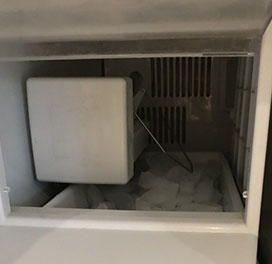
Why Is My Maytag Icemaker Not Making Ice
Frequently Asked Questions
How long should I wait after I’ve fixed things to expect ice?
Allow 24 hours for the first batch of ice after repairs or resetting the system. Under normal conditions, the ice production cycle takes 90 to 180 minutes to complete a batch, depending on how full your freezer is and the humidity levels. A full ice bin will take anywhere from 24 to 48 hours, depending on usage.
Why does my ice taste bad or smell funny?
Water quality is what determines the quality of your ice. If your water filter is due for a change, swap it out right away. Clean your ice bin with warm, soapy water and rinse thoroughly – old ice can absorb odours from the freezer. Also, check for any strong-smelling foods that might be stored nearby, as ice is a sponge for ambient odours.
How often should I do maintenance on my Maytag ice maker?
-
Every 6 months: Change that water filter, regardless of how often you use the ice maker.
-
Monthly: Clean the ice bin if you notice the ice is developing off-flavours or clumping together.
-
Annually: Inspect water line connections for leaks, mineral buildup, or kinks – a little bit of maintenance can go a long way.
-
As needed: Pop in an independent thermometer to check your freezer temperature.
-
As needed: Double-check your water supply lines for pinches or kinks. Regular maintenance is the best way to keep your ice maker running smoothly & prevent 8 out of 10 common issues that otherwise would’ve ended your unit’s life after a pretty short span of 5-7 years.
Your Maytag ice maker was meant to churn out ice cubes without any real issues for years to come but let’s be honest here – proper care & maintenance can keep it doing just that . Plus , if you keep an eye out for any red flags , you can avoid those pricey service calls & know when it’s time to bring in the pros.
For more information about icemakers or any repairs, please contact us today on 0207 8709645
07896 298411 or email us Today