

Maytag Fridge Freezer Top Tips – An Expert Guide to Making Yours Run Like a Dream
Getting Your Maytag Fridge Up to Speed: The Basics of Optimal Performance
To get the most out of your Maytag fridge, you need to know the basics – temperature control, storing food just right, and regular maintenance. And the first thing to get right is the temperature. You’ll want to keep your fridge between (0°C to 4.4°C), with (3°C) being the magic number. For the freezer, a steady (-18°C) is the key to keeping your frozen foods in top nick.
Now, when it comes to airflow, this is really where the magic happens. Proper cold air circulation is key to getting your fridge and freezer to cool evenly. Don’t go overcrowding your shelves and freezer – this will just block the air and end up with spoiled food and a whole lot of hassle. Then there’s the crisper drawers – use these to trap the humidity, and you’ll find your fruit and veg last way longer. And when it comes to sorting out food, be sensible – get rid of the bruised and soggy bits, otherwise they’ll ruin everything else.
When freezing food, it’s all about getting it wrapped up right. Use some good-quality freezer wrap before you chuck them in, and you’ll prevent all sorts of problems. Don’t store dairy foods in their original containers unless you really need to – they’ll go off far faster. And then there are the tricky ones, like ice cream and orange juice, best stored in the main freezer rather than on the door shelves.
When you are putting new foods in the freezer, don’t just chuck them in there all at once – this will only stress the thing out and make it inefficient. The same goes for cleaning up – make sure you’re not leaving too much clutter in there. And don’t forget to clean those condenser coils and check the door seals regularly – you don’t want to be stuck with a non-functioning fridge because you forgot to do these simple tasks.

Maytag Fridge Freezer Top Tips Expert Guide to Optimal Performance.
The Basics You Really Need to Get Right
- Set your fridge to 3 °C and freezer to -18 °C for the best food preservation and energy efficiency
- Don’t be a slob – organise your food so that the perishables are at the back and use those crisper drawers
- Clean your condenser coils every 6 months and check those door seals regularly – it’s all about keeping things running smoothly
- Don’t overfill the freezer – leave enough space for the air to circulate, and your frozen foods will thank you
- Get an appliance thermometer to make sure your fridge is at the right temperature – and if it’s not, you’ll be able to catch any problems early doors
You’ve just splashed out on a new Maytag fridge, so now you need to make sure you’re getting the most out of it. With a bit of TLC and some good old-fashioned common sense, you’ll get years of service out of your appliance.
Modern Maytag fridges are pretty advanced, and getting to know how yours works is the key to saving you a pretty penny in energy and food bills. Once you know what you’re doing, you’ll be amazed at just how much you can do to keep your fridge running smoothly.
How to Get the Best from Your Maytag Fridge
It all starts with the temperature – and getting it right is not rocket science. For your Maytag fridge, you want the temperature between (2°C to 3°C) with (3°C) being the sweet spot. The freezer should be at a steady (-18°C) to keep your frozen foods from turning into mush.
The thing is, built-in displays often don’t give you the real temperature, so it’s worth getting an appliance thermometer just to be on the safe side. Then there’s the priority of allowing 24 hours for the fridge to stabilise after any changes you’ve made. Don’t be tempted to keep tweaking the settings – it’s worth the patience to get it right the first time.
You’ll want to keep the temperature above 3c in the fresh food compartment, or you’ll end up with frozen produce and liquids with ice crystals. Then there’s the freezer, where you don’t want to go too low, or you’ll be wasting energy without getting any benefits.
Smart Food Organisation Strategies
If you want to get the most out of your Maytag fridge in terms of food quality and energy efficiency, then it’s time to get smart about how you store your food. Working out which temperature zones are best for what type of food will make all the difference. Generally, the coldest spot is at the back of the top shelf – perfect for your dairy goods and leftovers that need to stay nice and cold. Sour cream, in particular, needs to be stored in the coldest part of the fridge to stay good.
Meanwhile, condiments and beverages can go in the door – they’re not as fussy about temperature, and won’t make a big difference to food safety if they get a bit warm. Keep your eggs safe in the main compartment, rather than on the door.
Crisper drawers are a bit more finicky – it all depends on what you’re storing in there. Set low humidity for fruits like apples and citrus, while high humidity is better for leafy greens and veggies. It’s a bit of a balancing act, but trust us – it’s worth getting right. And if you’re storing raw meat, make sure you’ve got it wrapped up tight to prevent cross-contamination.
raw meat requires a bit of extra TLC – keep it on the bottom shelf in a sealed container, and make sure you’re not letting odours get to other foods. Most dairy goods do best in the coldest areas of the fresh food compartment, so keep an eye out for those.
If you notice a bit of mould on your cheese, don’t panic. Just cut the affected bit off and chuck it, and you’re good to go.
Try not to let too much warm food into the fridge at once – it puts a strain on the compressor and can mess up your temperature. And for goodness sake, don’t overcrowd – that’s just a recipe for spoilage. Cool off those leftovers before chucking them in the fridge, and consider breaking big portions into smaller containers to speed up the cooling process.
Freezer Organisation Best Practices
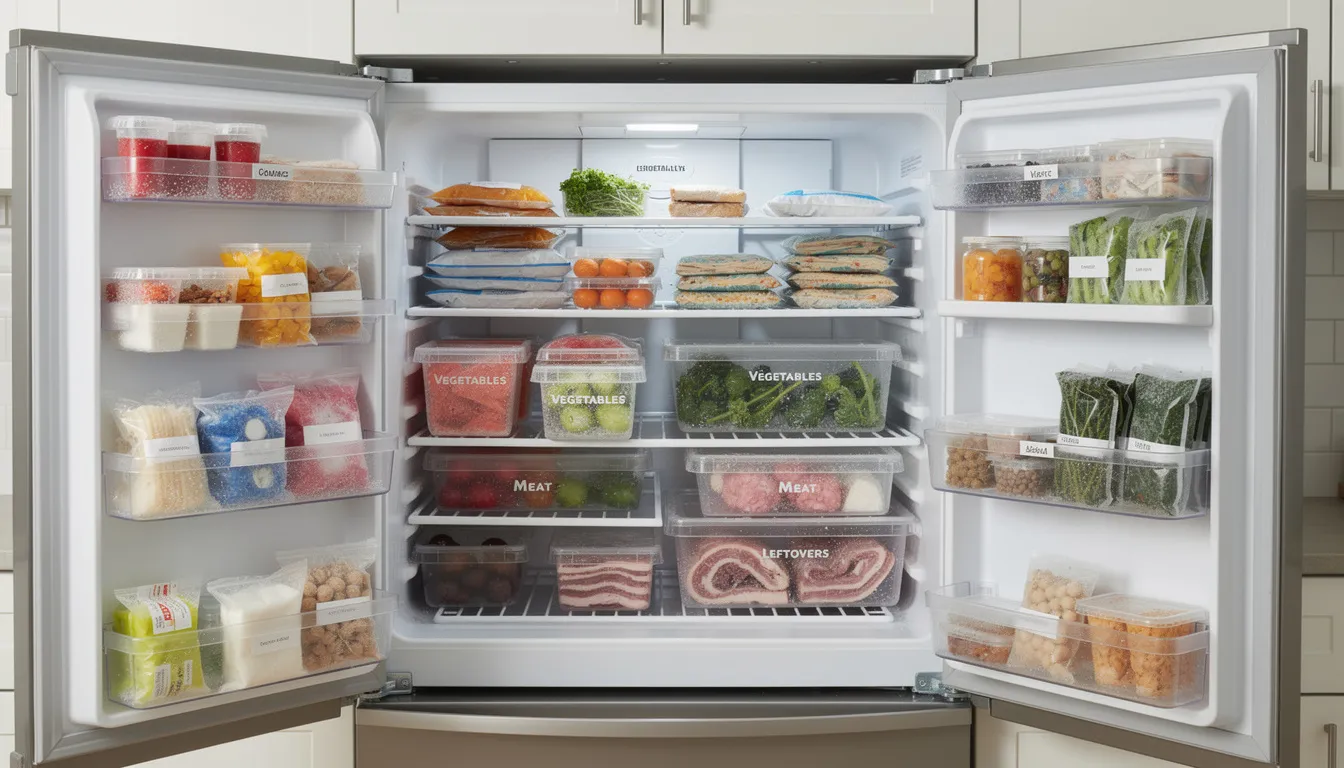
Getting your freezer at least 75% full actually helps with energy efficiency – it’s all about thermal mass. Just don’t go overboard and overcrowd the thing – you need to leave some room for cold air to circulate. Ice cream and frozen desserts are best kept away from the door, where it’s nice and stable.
Proper packaging is key when it comes to frozen foods. Use airtight containers and suck out as much air as possible from freezer bags before sealing. And use some decent freezer wrap to prevent moisture loss and keep things from tasting off.
Label all your frozen packages with dates, and follow the first-in-first-out rule to keep things fresh. Some foods, like bread and soft items, are best used within a certain timeframe to prevent quality from going downhill. And whatever you do, don’t refreeze something that’s already gone from frozen to thawed – that’s just asking for trouble.
Maintenance Tips for Long-Term Performance
Regular maintenance is the key to getting the most out of your Maytag fridge. Clean out those condenser coils every six months with a vacuum or a specialised coil brush. Dirty coils can make the compressor work harder, which is just bad news all around. If you’re a pet owner or live in a dusty area, you might need to do this more often.
Check your door seals monthly with the old dollar bill test – if the bill slides out easily when the door is closed, the seal needs a bit of TLC. Letting warm air in can cause frost buildup and make the fridge work harder.
Replace your water filters every six months or according to the model’s indicator light. Clogged filters can affect ice production and the taste of your water. And don’t forget to run a few batches of ice after replacement and flush a bit of water to get rid of any carbon fines.
If you get ice buildup in your manual defrost model, you need to defrost it pronto. And even if you’ve got an auto-defrost model, you might need to step in if the defrost system goes pear-shaped.
Don’t forget to keep the exterior vents clear of dust and debris, and make sure the fridge has enough clearance from the walls and cabinets according to the manufacturer’s specs. Anything less and you’re just making the fridge work harder. To keep things running efficiently and prevent weird smells from kicking in, make sure to keep the interior of your fridge clean. Don’t let spills sit around for too long – dried-up messes are way harder to clean and can harbour all sorts of unwanted bacteria. Once a month, whip up a solution with 2 tablespoons of baking soda in a quart of water and use it to give your fridge a good, deep clean. This trick not only gets rid of any lingering odours but also doesn’t leave behind any yucky chemical residues.
Get into the habit of washing the crisper drawers and fridge shelves with some warm, soapy water on a regular basis. These parts can be breeding grounds for bacteria and bad smells, so don’t neglect them. Also, make sure to dry everything off completely before putting them back in place – you don’t want any lingering water to go and grow some unwanted mould.
And don’t forget about the drip pan underneath your Maytag fridge. Clean that one out every three months; it’ll be a big help in preventing those nasty odours from kicking in. And if you’re not sure how to get to it, check your owner’s manual for instructions on how to remove the panel.
Time to replace your baking soda boxes, too. Every three months should do it. Just pop them in a spot where the air can circulate and away from any foods that might pick up that baking soda taste. And when you’re storing stinky foods, make sure to wrap them up nice and tight so they don’t go and contaminate the rest of your fridge.
Getting regular with your fruit and veggie sorting is a must, too. Chuck out any bruised or soft ones before they go and spread their funk to the rest of the produce. And if you do happen to find some mould, just get rid of it before it has a chance to spread. Keeping everything organised and regularly checking on it will not only keep your food nice but also prevent your fridge from getting all gunked up.
Troubleshooting Common Issues
Okay, so your Maytag fridge isn’t cooling properly. Don’t worry, it’s not always a major problem. First off, check if it’s in one of these Demo or Showroom modes. sounds weird, I know, but they can sometimes get turned on by accident. If that’s not it, then you’ll need to check the power supply and circuit breaker to make sure everything is working as it should. Sometimes a loose connection or a tripped breaker can look like a cooling problem. Test the outlet with another appliance and make sure you’ve got a good flow of power.
If the temperature is all over the place, take a look at the door seals. Are they all cracked and broken? If there are gaps or damage, that can let warm air in and make your fridge work way harder than it needs to. Just wrap a bit of paper around the seal and see if there are any gaps; if there are, you might need to get them replaced.
If your fridge isn’t cooling evenly between compartments, check the air vents to see if anything is blocking them. You’d be surprised how often food gets jammed in there and stops the air from circulating properly. Make sure all the vents are clear, and you’re good to go.
If your fridge is out of power, don’t call for service right away; give it 24 hours to get back on its feet. These new-fangled fridges have got built-in protection circuits that might make it look like it’s not working. But trust me, just give it a day or two, and it’ll be back up and running in no time.
Ice Maker Troubleshooting
Having a problem with your ice maker? It’s probably just a simple fix before you need to call out a professional. Sometimes, just turning it off for a day and then turning it back on again will do the trick in clearing out any minor glitches. If that doesn’t work, take a look at the water line to see if there are any kinks or clogs stopping the flow of water to the ice maker. Low water pressure can also cause problems with your ice maker – so make sure all the shut-off valves are fully open, and the household water pressure is top-notch.
If the ice tastes funny or the production has slowed down, it’s probably time to replace the water filter. It’s like when you get a new vacuum cleaner – the first few bags you use can be a bit rubbish because they need to get the old gunk out. Same with the water filter – it’s worth getting a new one to make sure your ice is nice and clean.
Ice Maker Troubleshooting
Bingo, your ice maker is still not working? The first thing to do is check the freezer temperature. Is it nice and toasty at -18C, or is it a bit warmer than that? If it’s warmer than it should be, you might not be getting proper ice formation and hence the soft clumpy ice. Take a look at the water filter too, if it’s all clogged up, it can be the cause of your ice maker woes.
If you’ve got an ice jam, just pop the bin out and check the dispensing mechanism for any blockages. Sometimes ice cubes just stick together and block the whole thing. Don’t use any metal tools to try and clear it out, as that can just scratch everything up – just use some warm water or let it melt on its own.
Energy Efficiency Optimisation
Saving some cash on your energy bills is always a good idea, right? Make sure your Maytag fridge is in a nice cool spot away from the ovens and dishwashers that are just blasting out heat all day. And if it’s got a sunny spot on the wall, try and move it – that’s just making your fridge work harder and using more energy.
When you’re putting hot food in the fridge, just let it cool down to room temperature before chucking it in there. If you put it straight in, it’ll raise the temperature of the fridge and make the compressor work way harder. And if you’ve got a big load of food in the fridge, just divide it up into smaller containers to get it to cool down faster and use less energy.
And while we’re at it, try to use the doors a bit less. Doors open and shut are just letting all the cold air out and letting the warm air in, which makes the compressor work overtime. Plan your fridge visits and make sure you’re not browsing for ages in there.
Using the fast freeze feature all the time is not a good idea either – it uses way more energy than it needs to. Use it sparingly when you need to chill something down really quickly, but don’t just leave it on all the time.
When you’re thinking of getting a new fridge, do check the Energy Star ratings – the newer models are way more efficient than the older ones. And just remember – if you’re using a lot of energy, it’s always a good idea to get the most efficient thing you can.
Frequently Asked Questions
How often should I clean the condenser coils on my Maytag refrigerator? Clean your condenser coils every 6 months for peak performance, or every 3 months if you’ve got pets that shed or you live in some pretty dusty surroundings. Clogged up coils make your compressor work way too hard, which eats into efficiency and can even cut the lifespan of the appliance short. Use a vacuum with a brush attachment or one of those coil cleaning brushes that are specifically designed for the job to get dust and debris off the coils.
Why is my Maytag freezer putting out an awful lot of frost even when I’m sure it’s set at the right temperature?
Frost usually means air is leaking out from a damaged door seal, you’re opening the door a lot, or you’re storing hot food in the freezer without letting it cool down first. Take a look at the door seals and see if they’re torn – the dollar bill test will give you a pretty good indication – make sure the doors close all the way and stay shut, and always take the time to let your food cool to room temperature before chucking it in the freezer. If the frost persists, it might be worth getting a pro to take a look at the auto-defrost system.
Can I adjust the humidity level in my Maytag’s crisper drawers?
Yeah, most Maytag models have an adjustable humidity control in the crisper drawers. Set it to high for stuff like leafy greens and vegetables to keep them nice and crisp, and low for fruits like apples and citrus to stop them from going off too quickly. Getting the humidity just right can keep your produce fresh for a few extra days and cut back on waste.
What should I do if my Maytag fridge is running all the time?
If it’s running all the time, it could be because the coils are dirty, you’ve got the temperature settings wrong, the door seal is damaged, or the fridge is just too overloaded and not getting enough airflow. Clean the coils first, then check that the temperature is set right (it’s 3c for the fridge, 0°F for the freezer), take a look at the door seal and make sure it’s good to go, and give the fridge some space so it’s got some air to breathe.
How long should I wait before plugging in my Maytag fridge after Ive moved it?
Wait at least 4 hours before plugging in your Maytag fridge after a move, or 24 hours if you tipped the thing on its side in transit. Giving it some time lets the refrigerant oils settle back into the compressor and prevents potential damage when you fire it up – rushing it can cause the compressor to blow and probably void your warranty to boot.